The Legacy of Técnicos and Rudos in Lucha Libre
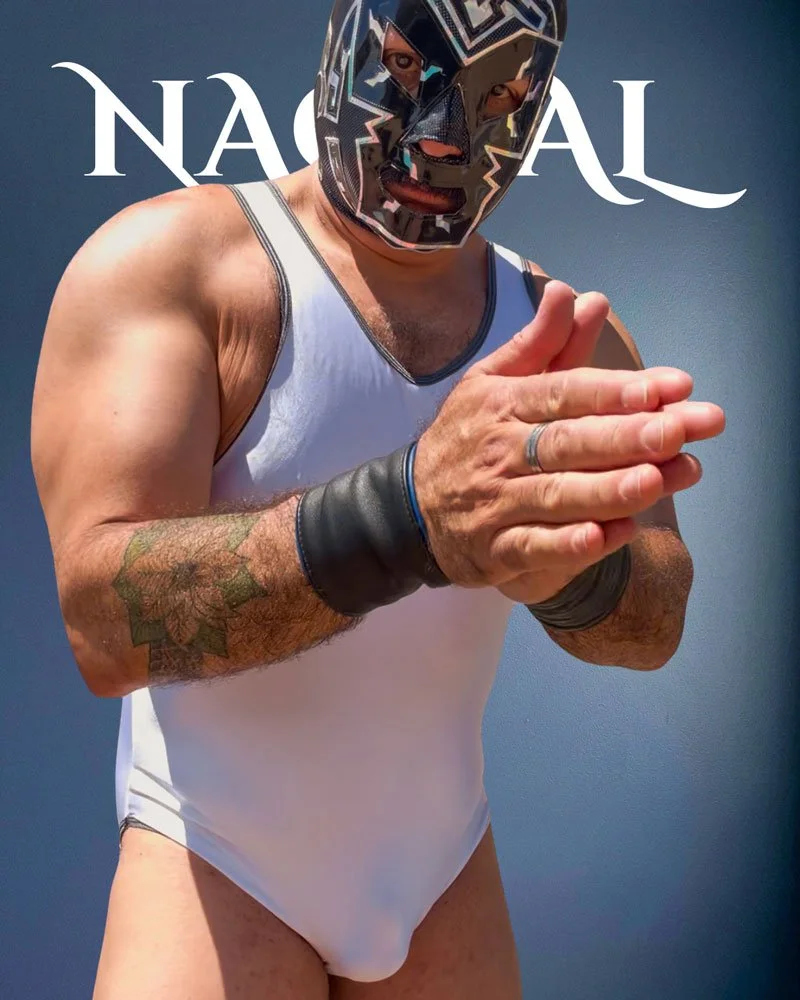
By Nagual
There is a full world inside lucha libre that most outsiders will never experience. Casual audience members marvel at the masks, the aerial moves, the bodies flying from the top rope. They see the crowd going insane, fans screaming their heads off for their favorite luchador. What they do not see is the Mexican tradition and the moral architecture underneath all of it: lucha libre thrives on an ancient and unspoken law that divides every man, woman and person who laces up their boots into one of two categories. Técnico or rudo. Hero or villain. The one who fights clean, and the one who does not.
Lucha libre without the técnico-rudo structure is just two men fighting for ratings and for clicks. Lucha libre, which flows with the blood of Mexican myth and culture, creates something much bigger. Every match becomes a Shakespearean play conducted in movement and pain, a story the audience connects to with immediacy and emotion. Lucha libre goes for the heart. But it's all dependent on the duality of good and bad, técnico and rudo, and the luchador’s ability to convey that story to the crowd.
The Moral Logic of the Ring
The word técnico means technician. A técnico fights with precision and honor; his submissions are clean, his aerial maneuvers executed with the grace of someone who has trained for twenty years. He respects the referee. He respects the crowd. He does not cheat. The audience loves him because he represents something they want to believe is possible: that discipline and virtue are rewarded, that the honest man wins.
The word rudo means rough or rude one. A rudo breaks the rules whenever the referee's back is turned. He pulls hair, bites, uses the ropes for leverage on a pin, brings a foreign object from his tights when the situation demands it. His relationship with the referee is one of contempt and resentment. The audience hates the rudo because he represents the thing they know too well from their own lives: that the powerful cheat, and that sometimes the cheater wins. In Mexico we say "Es un tranzas" to denote a person who cheats. Rudos are tranzas.
In lucha libre, the técnico-rudo binary carries a cultural weight that it does not carry elsewhere. It emerged in the 1940s when Mexico City was flooded with workers from the countryside and the arenas of the capital were full of men and women who understood corruption and injustice not as abstract concepts but as daily weather. The técnico was not simply a good wrestler. He was a projection of the working man's hope, a symbol of the proletariat identity. He was also a symbol for the hard-working head of a family, which back then was often visualized as a man, in a time before gender expansion and the rise of queer rights. But the good intentions of the técnico are timeless. He's a steward. He is what you want to grow up to be when you are just a child.
The sociologist David William Foster, writing about El Santo's place in Mexican popular culture, described this function with precision: the técnico embodied the idea that someone would avenge the wrongs of the world. While wearing a skintight mask of leather, spandex and satin.
And the rudo? The rudo was the boss who shorted your pay. The rudo was the landlord who raised the rent. The rudo was the scammer who steals your wallet in the Metro station.
The rudo was corruption made flesh, put in the ring so that the técnico could—at least for one night—pin him to the mat and keep him there for three seconds.
El Santo: The Saint Who Started as a Sinner
The greatest técnico in the history of lucha libre began as a rudo. This is worth sitting with.
Rodolfo Guzmán Huerta debuted in 1942 under the name El Santo, wearing a silver mask and proceeding to behave in a manner that had nothing to do with sainthood. He cheated. He brawled. He gave an opponent eight consecutive low blows in a single match, which so enraged the man's wife in the audience that the incident made the papers the following day. He was, by every account of the era, one of the most hated rudos in Mexico City.
He remained a rudo for twenty years.
The transformation came in 1962. The crowd had begun to love him despite his villainy. They loved his silver mask, his silver tights and trunks. They loved the myth that was accumulating around the man inside it: the appearances in comic books, the rumors about his life, the sense that El Santo was something outside the normal categories. When his tag partners turned on him during a match, the audience did not cheer. They were furious on his behalf. The rudo had become a técnico by popular demand.
What followed was four more decades of El Santo as the moral center of Mexican popular culture: fifty-two films in which he fought vampires and werewolves and alien invaders while wearing his silver mask; a run as an elected representative of the working class in the court of popular legend; and a funeral in 1984 during which the streets of Mexico City filled with mourners. He was buried in his mask. He showed his face publicly once, one week before he died. Us Mexicans know very well why El Santo lived his life this way. He lived and died by the laws of lucha libre.
El Santo is the greatest técnico of all time because no other técnico has ever meant—thus far—what he meant to people. He was not simply a wrestler who played the hero. He was a vessel for a nation's need to believe that heroism was real and that the honest man could win.
The Three Greatest Técnicos
Source: Wiki Commons
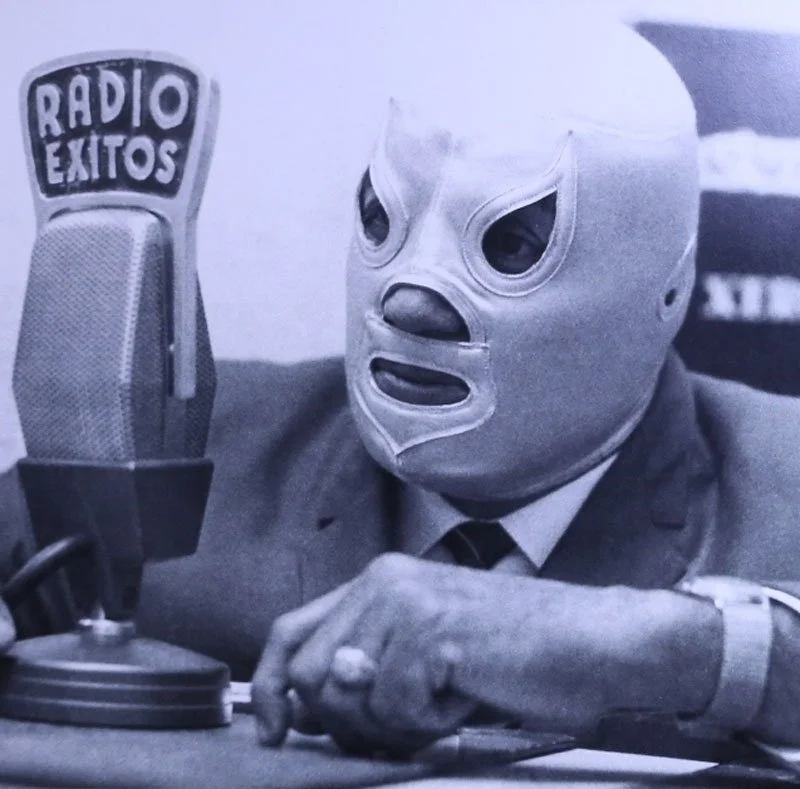
El Santo stands alone, as argued above: four decades as the moral anchor of lucha libre, a crossover into cinema and comics that made him the most recognizable masked figure in Mexican history; a career so mythologized that it is difficult to separate the man from the legend he became. He was voted the eighth greatest Mexican of all time in a national poll conducted decades after his death. The only wrestlers who have ever meant as much to a nation are wrestlers whose nations needed them as much as Mexico needed El Santo.

Source: Wiki Commons
Atlantis spent nearly two full decades as the standard-bearer of CMLL, the oldest wrestling promotion in the world, and carried that weight with a technical precision that made him the purest expression of what a técnico is supposed to be in the ring. His rivalry with Villano III produced one of the most celebrated mask-against-mask matches in history: a feud built over years, resolved in a moment of unmasking that sent the arena of Mexico City into something that resembled grief. When CMLL eventually turned Atlantis rudo in 2005, the crowd booed not because they hated him but because they could not accept what they were seeing. A man that clean had no business in that role. He served the story. He always served the story.
Source: Wiki Commons
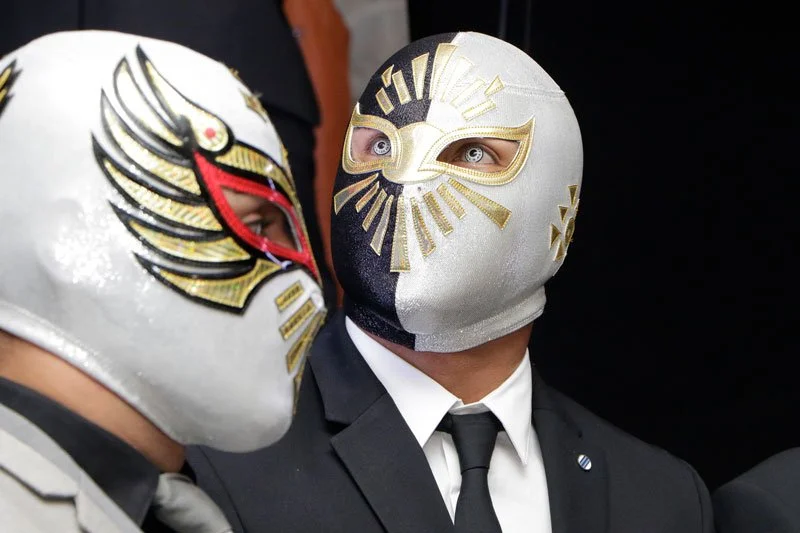
Místico is the most electric técnico of the modern era: a man whose entrance into CMLL in 2004 produced the kind of hysteria that most promotions spend decades trying to manufacture and never do. By 2006 the Wrestling Observer Newsletter had named him Wrestler of the Year, Best Box Office Draw, and Best Flying Wrestler simultaneously; no other luchador in the modern period has held all three at once. His finishing move, La Mística—a spinning arm drag that locks into a fujiwara armbar mid-rotation—is a piece of ring geometry so precise and so beautiful that it reads less like a wrestling hold and more like a proof. His rivalry with Averno defined CMLL's main event scene for years; his hair match against Negro Casas at the 76th Anniversary Show sent the arena delirious. He went to WWE, failed on their terms, came back to Mexico, and rebuilt. His 2025 was, by the assessment of people who have watched lucha libre their entire lives, one of the greatest single-year runs in the history of the sport. The capacity to return and reclaim is not a small thing. Místico understood what the técnico's job actually is: to make the crowd believe that the fall is not the end of the story.
The Three Greatest Rudos
Perro Aguayo was the rudo's rudo: violent, unpredictable, a man who transmitted genuine menace across the distance between the ring and the cheap seats. El Satánico, one of the great rudos in his own right, called Perro Aguayo the best rudo of all time upon his death—not as eulogy hyperbole, but as professional assessment delivered by a man who spent his career on the same side of the moral ledger. Aguayo held the UWA World Heavyweight Championship, co-founded AAA, and was the kind of heel who could fill an arena in any city in Mexico purely on the strength of how badly the crowd wanted to see him lose. That is the ultimate test of a rudo: whether the hatred he generates is productive. Perro Aguayo's hatred was productive for forty years.
Negro Casas operates in the space between categories, which is where the most interesting rudos always live. He was, across his career, both técnico and rudo depending on the moment, the promotion, and what the story required. But his greatest work came as a rudo: calculating, physical, possessed of a comic cruelty that made the crowd howl. His rivalry with El Hijo del Santo is the defining rivalry of CMLL's modern era, and what made it work was that Casas as rudo was as technically sophisticated as his técnico counterpart. He did not win through incompetence and cheating alone. He won through intelligence and cheating. The distinction matters. A rudo who only wins because he cheats is boring. A rudo who would win anyway but cheats because it is faster and more efficient—that rudo is frightening.

Source: Wiki Commons
Blue Demon began his career as a rudo, formed one of the great tag teams of the early era alongside Black Shadow under the name Los Hermanos Shadow, and turned técnico in 1952 for the simplest and most human of reasons: El Santo unmasked his partner. Blue Demon vowed revenge. That vow turned him, and what followed was one of the defining rivalries of the sport: the Demon versus the Saint, two masked men whose names should have told you who was who but never quite did. He defeated El Santo for the NWA World Welterweight Championship in 1953 and held it for nearly five years. He never lost a lucha de apuestas match in his entire career—not his mask, not his hair—and retired in 1989 to Arena México where he had started. He was buried in his blue and silver mask, like Santo before him; the mask as covenant, the mask as the face that told the truth. His crossover into cinema alongside Santo produced films so ingrained in Mexican popular culture that generations who never saw him wrestle knew his face, or rather knew the mask that was his face. Blue Demon belongs in the discussion of the greatest rudos not only because of what he accomplished as a rudo but because of what his turn revealed: that the rudo who becomes a hero is the one the audience never forgets.
The Ones Who Change
There is a third category that lucha libre acknowledges without naming: the ones who cross over. The ones who were one thing and became another.
El Santo began as a rudo and became the greatest técnico. Atlantis was a técnico for twenty years before turning rudo. Negro Casas traveled the axis between both poles so many times that his alignment at any given moment was almost beside the point: he was simply Negro Casas, and what he was depended on what the story needed. Blue Demon turned técnico because a friendship was betrayed and a mask was taken. He never looked back. Forty years later he was still wearing the blue and silver; the turn had become the truth.
These crossovers matter because they reveal something true about the moral architecture of the ring. The técnico-rudo structure is not a description of souls. It is a description of roles. And roles can change. The audience knows this and loves it precisely because it confirms what they suspect about the real world: that the categories of good and evil are not fixed to specific people, that a man who was a villain can become a hero, that the hero is always at risk of becoming the villain.
In the old stories of Mexico, the creature who holds this truth most completely is the nagual. A nagual is a shapeshifter: a being who wears one form and carries another inside it, who can move between identities the way a luchador moves between técnico and rudo—not randomly, not arbitrarily, but according to a logic that is animal and ancient and not always visible to those who are watching. Some naguals cause havoc and pain for people, and others are defenders of villages or natural resources. The choice lies within, but also in destiny.
I am a nagual. I wear one mask in public and keep other masks inside the one you can see. This is not deception. It is the nature of naguales (also spelled nahuales). The nagual changes not because he is false but because he is true to something deeper than any single face.
Every luchador who has ever turned—técnico to rudo, rudo to técnico—understands this without knowing the word for it. They understand that the mask is not the self. That the role is not the soul. That what you are in the ring tonight is not necessarily what you will be when the bell rings again.
Want more mythology, wrestling history, and stories from the old world? Subscribe to Transmissions at thenagual.net/transmission.