What Is a Nagual?
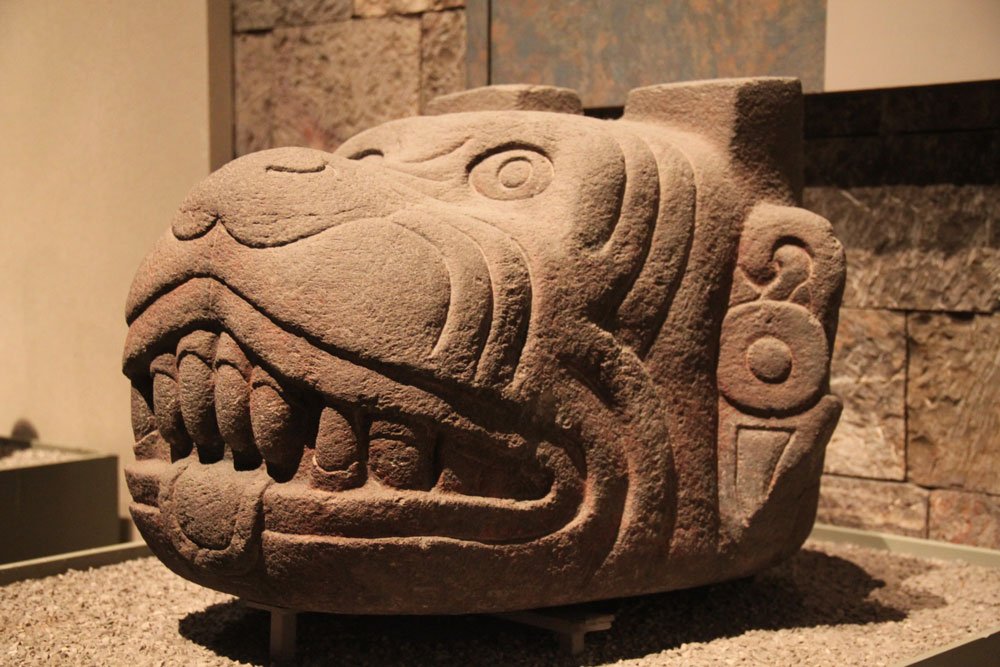
Photo: Gary Todd
Long before the Spanish ships appeared on the horizon of what is now Veracruz, the peoples of Mesoamerica understood something about identity that the Western world has spent centuries trying to articulate: that a person is not one thing. In their cosmology, the boundary between the human and the animal, between the visible world and the one beneath it, is permeable. And certain people can cross it.
The nagual (pronounced nah-WAHL, from the Classical Nahuatl nāhualli) is the figure at the center of that understanding. In the simplest terms, a nagual is a human being with the ability to shapeshift into an animal form. But simplicity is a poor guide to Mesoamerican thought. The nagual is also a guardian spirit; an animal counterpart assigned at birth; a sorcerer who moves between worlds; a healer; a keeper of dangerous knowledge. The word itself resists a single English translation. Colonial-era Spanish priests rendered nāhualli as "magician" or "sorcerer." Later translators reached for "transforming witch," a phrase that carries the stain of European demonology and has nothing to do with the indigenous concept. More faithful renderings include "shapeshifter," "one who is hidden," or simply "one who wears a disguise."
The Tonal and the Nagual: Two Halves of a Whole
To understand the nagual, you must first understand its counterpart: the tonal. In Aztec cosmology, every person is born with a tonalli, a day-spirit determined by their position on the sacred 260-day calendar, the tōnalpōhualli. Each of the calendar's twenty day-signs corresponds to an animal or natural force; the day of your birth establishes a bond between you and that animal for life. Your tonal is your visible companion, your public spiritual signature. If you were born on the day of the jaguar, you carry the jaguar's qualities: its power, its ferocity, its capacity for solitude.
The nagual is the other side of that bond. Where the tonal governs the daylight self, the nagual governs what moves in the dark. The nāhualli is the nighttime aspect, the hidden dimension. Some scholars describe the nagual as the shadow of the tonal; others treat it as a wholly separate force. What is consistent across the ethnographic record is the sense that the nagual represents a second self that exists beyond ordinary perception: an identity that can be accessed, inhabited, and wielded.
This duality has no precise equivalent in European thought.
Tezcatlipoca: The God Who Governs Nagualismo
If nagualism has a patron, it is Tezcatlipoca: the Smoking Mirror, the Lord of the Night Sky, the god whose tonal is the jaguar. In Aztec theology, Tezcatlipoca is the deity most associated with transformation, concealment, and the dangerous gift of seeing things as they actually are. His obsidian mirror reveals the truth that lies beneath the surface of reality. He is not a god of comfort. He can be benign, but also very cruel. He governs the distribution of power and wealth. He tests. He strips away pretense.
The jaguar, is Tezcatlipoca’s animal form, is the most feared and revered of all nagual shapes across Mesoamerica: from the Aztecs of the Central Valley to the Zapotec and Mixtec communities of Oaxaca, from the K'iche' and Tzeltal Maya of the southern highlands to the Nahua communities that persist today in Puebla, Veracruz, and Tlaxcala. The jaguar-nagual embodies authority, stealth, and the predatory intelligence of a creature that hunts in darkness.
In the European framework that the Spanish missionaries and colonizers imposed on indigenous belief systems, power that operates outside Christian moral categories must be demonic. The nagual, who could take animal form and move unseen through the night, became a witch: a servant of Satan, a danger to baptized children, an agent of evil. Father Bernardino de Sahagún, one of the earliest and most meticulous chroniclers of Aztec culture, recorded in his Historia General de las Cosas de Nueva España that the nāhualli "frightens men and sucks the blood of children during the night." But in the same passage, he also wrote that the nāhualli "employs [his arts] with cunning and ability; but for the benefit of men only, not for their injury." The contradiction is the point: Sahagún was attempting to describe a figure that his own theological framework could not accommodate.
The Genocide of Knowledge
What happened to nagualism after the Conquest is a great example of the erasure of indigenous people via the erasure of their culture. The Spanish Crown and the Catholic Church conducted a systematic campaign to eradicate indigenous religion across Mesoamerica. Codices were burned. Temples were demolished and rebuilt as churches using the same stones. Priests and calendar-keepers were executed or forced underground. The tōnalpōhualli, the sacred calendar that structured the entire system of tonalism and nagualism, was suppressed as an instrument of idolatry.
The Inquisition operated in New Spain from 1571 to 1820. Indigenous spiritual practitioners accused of nagualism were tried, imprisoned, and sometimes killed. Daniel Garrison Brinton, the nineteenth-century linguist who published the first Western study of nagualism in 1894, documented how nagualist practices had already been driven deep underground by centuries of persecution: surviving in rural communities, passed through oral tradition, stripped of institutional support, and often fused with Catholic imagery as a strategy of concealment.
The mechanism of this suppression had a name: leyendas negras. The term, which translates roughly as "black legends," describes the doctrine through which the Spanish Crown and the Catholic Church recast indigenous traditions as evidence of savagery and diabolism. As the Cambridge historian of magic and witchcraft has documented, the idolatry, witchcraft, and sorcery that Spaniards attributed to indigenous Mesoamericans served the same ideological function that tropes of racial inferiority served for later colonial projects: keeping the colonized in a permanent condition of otherness and subjection. Naguales were some of the prime targets. Shapeshifting practitioners who operated outside the Church's authority were reclassified as agents of Satan; their healing practices became witchcraft; their calendar-keeping became divination; their spiritual technologies became proof that indigenous peoples required Christian salvation and Spanish governance. The leyenda negra became the lens through which the colonizers justified the destruction of the systems they encountered: a way of turning indigenous knowledge into indigenous guilt.
What survives today in communities across Mexico, Guatemala, and the broader Mesoamerican diaspora are fragments of a system that was once comprehensive: a cosmology that mapped the relationship between every human being and the living world through a calendar of extraordinary precision.
Naguales Across the Map
One of the most persistent misconceptions about nagualism is that it is a single, uniform tradition. It is not. The word nagual and its cognates appear across dozens of Mesoamerican cultures, and the meanings shift with geography, language, and historical period.
Among the Nahua communities of the southern Huasteca in Puebla and Veracruz, the nāhualli is a shapeshifting sorcerer who can take the form of a bird of prey. In some villages, these figures are feared as predators who feed on the sleeping; in others, they are respected as protectors of the community, capable of wielding their power against external threats. In the nearby state of Tlaxcala, the nahual is more trickster than predator, and the greater fear is reserved for the tlahuelpuchi, a blood-drinking figure who transforms into a massive owl or vulture: a separate entity entirely.
In Oaxaca, the anthropologist Lucille Kaplan documented in the nineteen-fifties that belief in naguals as malevolent shapeshifters was common across both indigenous and mestizo populations, while the more nuanced concept of the tonal as a lifelong animal companion was found primarily in indigenous communities. Among the Jakaltek Maya, naguals serve a social function: they are believed to punish those who betray their community by collaborating with non-indigenous outsiders.
Among the Mixe, the Chinanteco, and other communities in southern Mexico, the nagual who can control their animal form is not a witch but a guardian: a figure of immense respect, feared and honored in equal measure. The community knows who they are. They are consulted, hired to lift curses placed by other naguals, and integrated into the local religious hierarchy alongside (and sometimes in tension with) Catholic institutions.
The Castaneda Problem
No discussion of the nagual in English is complete without addressing Carlos Castaneda, the Peruvian-born American author whose books, beginning with The Teachings of Don Juan in 1968, introduced the word "nagual" to millions of English-speaking readers. Castaneda claimed to have apprenticed under a Yaqui shaman named Don Juan Matus, and his books describe elaborate systems of perception, energy, and spiritual transformation in which the "nagual" functions as a term for the unknown, the unknowable, the vast field of consciousness beyond ordinary experience.
Castaneda's work sold tens of millions of copies and spawned an entire industry of New Age "Toltec" spirituality that persists to this day. It also bears little resemblance to anything in the actual ethnographic or historical record of Mesoamerican nagualism. Academic investigation, most notably by Jay Courtney Fikes and Richard de Mille, demonstrated that significant portions of Castaneda's fieldwork were fabricated: his doctoral dissertation at UCLA, which was based on the Don Juan material, has been widely discredited. The Yaqui people of Sonora, whom Castaneda claimed as the source of his teachings, do not recognize the practices he described.
The damage extends beyond academic fraud. Castaneda's version of the "nagual" displaced the indigenous concept in English-language discourse for decades. When an English speaker searches for "nagual" today, a significant portion of the results still lead to Castaneda-derived content: spiritual self-help material that uses Mesoamerican vocabulary as decoration for a worldview that has nothing to do with Mesoamerican thought. The word was appropriated, emptied of its cultural specificity, and refilled with the concerns of a mid-century Californian audience. That process is its own form of erasure, less violent than the Inquisition but operating along the same axis: the replacement of indigenous meaning with something more palatable to the colonizer's imagination.
The Mask and the Shapeshifter
There is a line that runs from the jaguar-nagual of pre-Columbian Mesoamerica to a wrestling ring in Mexico City, and it passes through the mask.
Historians of lucha libre have noted that the tradition of masked wrestling in Mexico draws on pre-Columbian precedent. Toltec and Aztec warriors wore animal masks in battle: jaguar knights, eagle warriors, figures who took on the aspect of their animal counterpart to channel its power. The luchador's mask operates on the same principle. It is not a disguise in the Western sense, a thing you put on to hide who you are. It is a declaration: a second identity that is as real as the first, inhabited fully, shed only under the most extreme ritual conditions. A lucha de apuestas, a match in which a wrestler stakes their mask, is the closest thing in modern Mexican popular culture to the unmasking of a nagual.
The connection between nagualism and the mask is this: both are pathways of transformation. Both assert that the human self is not singular nor confined to one form. The nagual who becomes a jaguar at nightfall and the luchador who becomes a rudo when the mask goes on are participating in the same ancient refusal to accept that identity is a settled question.
Symbolically, naguales remind you that you are not only what you appear to be, and reality is not only as fixed and permanent as you imagine. The nagual whispers these truths from the edge between night and day.
The Nagual sends transmissions on lucha libre, mysticism, and the old stories every two weeks. If you want them, they are here.